Ērān : le nom que trois mille ans n’ont pas su effacer
Iranica · Êrān · ایران
Ērān : le nom que trois mille ans n’ont pas su effacer
D’où vient le mot « Iran » ? De la pierre de Darius au livre de Ferdowsi, de l’empire sassanide au décret de 1935, l’histoire d’un nom qu’un peuple s’est donné à lui-même, et qu’aucun conquérant n’a jamais pu lui reprendre.
Ērān: the name three thousand years could not erase
Where does the word “Iran” come from? From the stone of Darius to the book of Ferdowsi, from the Sasanian empire to the decree of 1935, the story of a name a people gave itself, and that no conqueror ever managed to take back.
Un nom qui se dit soi-même
Il y a des pays qui portent le nom que d’autres leur ont donné. La Perse est de ceux-là : le mot vient du grec Persís, qui désignait une seule province, le Fars, berceau des Achéménides. Les Grecs ont pris la partie pour le tout, et l’Europe les a suivis pendant vingt-cinq siècles.
Mais les Iraniens, eux, ne se sont jamais appelés « Perses » au sens où l’entendait l’Occident. Ils avaient leur propre mot. Un mot plus ancien que Rome, chanté dans les hymnes du Rigveda et de l’Avesta bien avant d’être gravé dans la pierre. Ce mot, c’est ariya. Et de lui est né Īrān.
I. Arya : le nom des origines
Aussi loin que les textes nous permettent de remonter, les peuples qui parlaient les langues indo-iraniennes se désignaient eux-mêmes par un même nom : árya dans le Rigveda, airiia dans l’Avesta, ariya en vieux-perse. C’était un nom d’appartenance, celui d’une langue, d’une culture et d’un culte partagés, et non une étiquette posée par l’étranger.
D’où vient ce mot ? Les linguistes en débattent depuis deux siècles, et l’honnêteté oblige à le dire. Certains le rattachent à une racine indo-européenne ∗h₂eryós, « membre de notre groupe », « homme libre » ou « hôte » ; d’autres, comme Oswald Szemerényi, y ont vu un emprunt au Proche-Orient, hypothèse que Mallory et Adams jugent peu convaincante.¹ Le sens de « noble », que l’on cite souvent, appartient surtout au sanskrit plus tardif. Ce qui ne fait aucun doute, en revanche, c’est l’essentiel : arya est le nom qu’un peuple se donnait à lui-même, il y a plus de trois mille ans.
Hérodote lui-même en garde la trace. Au Vᵉ siècle avant notre ère, il note que les Mèdes « étaient autrefois appelés Arioi par tous les peuples ».²
II. La pierre parle : Darius
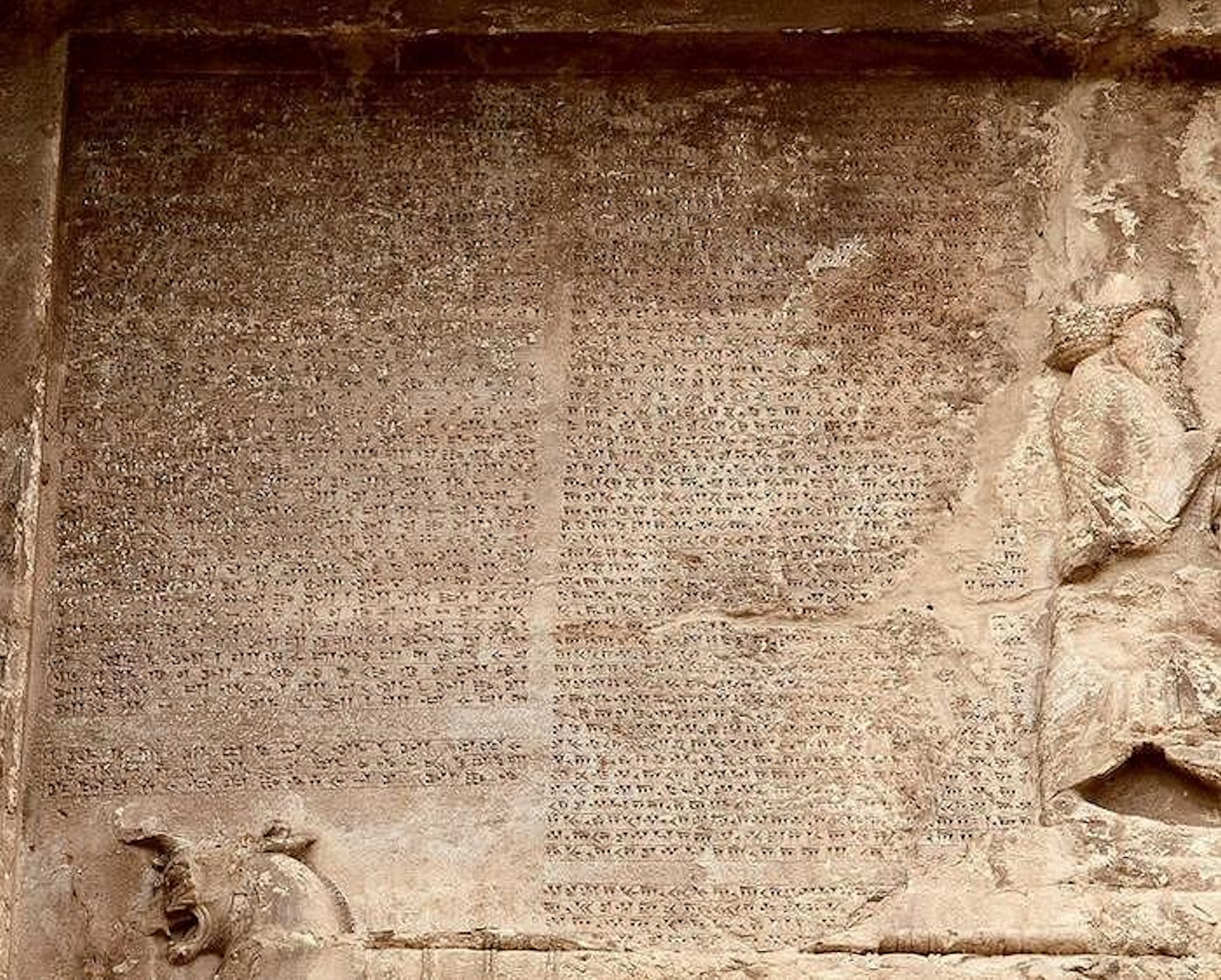
Vers 490 avant notre ère, Darius le Grand fait graver sur la falaise de Naqsh-e Rostam, au-dessus de son tombeau, les mots par lesquels il veut que l’éternité le connaisse :
« Je suis Darius, le grand roi, roi des rois… Perse, fils de Perse, Aryen, de lignée aryenne. »
pārsa pārsahyā puça, ariya ariyačiça (inscription DNa)³
Relisons cette phrase. Le maître du plus vaste empire que le monde ait connu, de l’Indus au Nil, ne se définit ni par ses conquêtes ni par ses dieux. Il se définit par deux appartenances : sa province, la Perse, et son peuple, les Aryens. Ariya ariyačiça : aryen, et de souche aryenne. Peu de souverains ont laissé dans la pierre une affirmation d’identité aussi nette.
III. L’Avesta : la patrie des commencements
Dans le livre sacré des zoroastriens, la terre des origines porte un nom : Airyanem Vaejah, « l’étendue des Aryens », que la tradition persane appellera Ērānwēz, puis Iranvij. C’est la première des terres créées par Ahura Mazda dans le premier chapitre du Vendidad, et, selon la tradition, le lieu où Zarathoustra reçut la révélation.⁴ Les hymnes de l’Avesta invoquent aussi les « contrées aryennes ».
Avant d’être un État, l’Iran fut donc une patrie rêvée, un pays de l’âme et de la mémoire, que l’on chantait avant de le gouverner.
IV. Ardashir et Shapur : quand le nom devient un empire
Au IIIᵉ siècle de notre ère, une dynastie née au Fars relève l’héritage achéménide : les Sassanides. Et c’est avec eux que le mot prend la forme que nous connaissons.
Sur le relief de son investiture à Naqsh-e Rostam, au pied des tombeaux achéménides, Ardashir Iᵉʳ se proclame « roi des rois des Aryens », šāhān šāh ērān. Ērān est un ancien génitif pluriel, issu de ∗aryānām : « des Aryens ».⁵
Son fils Shapur Iᵉʳ, vainqueur de trois empereurs romains, fait graver sur la Kaʿba-ye Zartosht une titulature plus vaste encore : « roi des rois d’Ērān et d’Anērān », des Aryens et des non-Aryens, et « maître d’Ērānšahr », l’empire des Aryens.⁵
Pour la première fois, un nom de peuple devient le nom d’un État. Le grand iranologue Gherardo Gnoli a consacré un livre entier à ce moment fondateur, The Idea of Iran : c’est là, sous les Sassanides, que l’« idée d’Iran » devient une idée politique, religieuse et culturelle à la fois.⁶ Ērānšahr deviendra Iranshahr, et Ērān deviendra Īrān.
V. Ferdowsi : le nom sauvé de l’oubli
Puis vint la nuit. Au VIIᵉ siècle, l’empire sassanide tombe sous la conquête arabe. Le pouvoir change de langue, de foi, de capitale. Pendant trois siècles, on aurait pu croire que l’Iran n’était plus qu’une province d’un empire étranger.
C’est alors qu’un poète de Tus, Ferdowsi, consacre trente ans de sa vie à un seul livre. Achevé vers 1010, le Shâhnâmeh, le Livre des Rois, raconte en près de cinquante mille distiques l’histoire de l’Iran depuis le premier roi du monde. Le mot « Iran » y revient à chaque page, comme un battement de cœur. Un vers célèbre, que la tradition lui attribue, le résume :
« Si l’Iran ne doit plus être, que mon corps ne soit plus. »
چو ایران نباشد تن من مباد
Le nom avait perdu son empire. Il venait de trouver son poème. Et ce qui est chanté ne meurt pas.
VI. 1935 : le monde apprend le nom
Pendant des siècles, les Iraniens ont dit « Iran » entre eux, et le monde a continué à dire « Perse ». Le 21 mars 1935, jour de Norouz, Reza Shah demande aux États étrangers d’employer désormais, dans leur correspondance officielle, le nom que le pays se donne à lui-même : Iran.⁷
Le geste avait sa logique. Un peuple qui renaît veut être appelé par son nom, et non par celui d’une de ses provinces. Il eut aussi un prix : « Perse » portait vingt-cinq siècles de prestige, et « Iran » sonnait neuf aux oreilles étrangères. En 1959, après les travaux d’une commission présidée par l’iranologue Ehsan Yarshater, le gouvernement admit que les deux noms pouvaient être employés.⁷ Mais pour les Iraniens, la question n’avait jamais existé : ils avaient toujours vécu en Iran.
VII. Le mot volé
Il faut maintenant dire ce que le XIXᵉ et le XXᵉ siècle ont fait de ce mot.
En 1853, Arthur de Gobineau publie son Essai sur l’inégalité des races humaines et transforme un nom de peuple et de langue en catégorie raciale. Le nazisme ira jusqu’au bout de cette imposture et fera de l’« aryen » le prétexte de l’un des plus grands crimes de l’histoire.
Le linguiste Max Müller, qui avait popularisé le terme en Europe, s’en indignait dès 1888 :
« Un ethnologue qui parle de race aryenne, de sang aryen, d’yeux et de cheveux aryens, est aussi grand pécheur qu’un linguiste qui parlerait d’un dictionnaire dolichocéphale ou d’une grammaire brachycéphale. »⁸
Dans les sources iraniennes, ariya n’a jamais désigné une race. Il nomme une langue, une culture, une appartenance. Darius ne mesurait pas des crânes : il revendiquait une lignée et une parole. Rendre au mot son sens, c’est aussi le rendre à ceux qui l’ont porté les premiers.
VIII. Ce que dit le nom aujourd’hui
Trois mille ans ont passé. Les Achéménides sont tombés, les Sassanides sont tombés, les conquérants sont venus et repartis. Mais le nom est resté. Il a survécu à Alexandre. Il a survécu à la conquête arabe. Il a survécu aux Mongols. Il survivra au régime des mollahs.
Car ce régime n’a jamais aimé ce nom. Il lui a accolé l’adjectif « islamique », comme on pose un scellé sur une porte. Il a voulu faire oublier Darius, Cyrus et Ferdowsi, interdire le Lion et le Soleil, éteindre Norouz et les feux de Chaharshanbeh Suri. Il n’y est jamais parvenu. Chaque année, au printemps, des millions d’Iraniens sautent encore par-dessus le feu, comme le faisaient leurs ancêtres bien avant l’islam.
Ērān : « des Aryens ». Un génitif pluriel. Un mot qui dit nous. Depuis trois mille ans, il répète la même chose à qui veut l’entendre : ce pays appartient à son peuple.
« Ma melat-e kabirim, Iran ro pas migirim. » — « Nous sommes une grande nation, nous reprendrons l’Iran. »
Payandeh Iran. Javid Shah.
Références
- J. P. Mallory et D. Q. Adams, The Oxford Introduction to Proto-Indo-European and the Proto-Indo-European World, Oxford University Press, 2006 ; O. Szemerényi, « Studies in the Kinship Terminology of the Indo-European Languages », Acta Iranica 16, 1977 ; P. Thieme, Der Fremdling im Ṛgveda, 1938.
- Hérodote, Histoires, VII, 62.
- Inscription de Darius Iᵉʳ à Naqsh-e Rostam (DNa), §2 ; R. G. Kent, Old Persian: Grammar, Texts, Lexicon, 1953 ; R. Schmitt, The Old Persian Inscriptions of Naqsh-i Rustam and Persepolis, 2000.
- Avesta, Vendidad, chapitre 1.
- Encyclopaedia Iranica, « Ērān, Ērānšahr » (G. Gnoli) ; inscription d’Ardashir Iᵉʳ à Naqsh-e Rostam ; inscription de Shapur Iᵉʳ à la Kaʿba-ye Zartosht (ŠKZ).
- G. Gnoli, The Idea of Iran: An Essay on its Origin, Rome, IsMEO, 1989.
- « Name of Iran », synthèse des sources sur le décret de 1935 et la commission de 1959.
- F. Max Müller, Biographies of Words and the Home of the Aryas, Londres, 1888, p. 120.
A name that speaks of itself
Some countries bear the name others gave them. Persia is one of them: the word comes from the Greek Persís, which designated a single province, Fars, the cradle of the Achaemenids. The Greeks took the part for the whole, and Europe followed them for twenty-five centuries.
But Iranians never called themselves “Persians” in the sense the West meant it. They had their own word. A word older than Rome, sung in the hymns of the Rigveda and the Avesta long before it was carved in stone. That word is ariya. And from it, Īrān was born.
I. Arya: the name of the beginnings
As far back as the texts allow us to go, the peoples who spoke the Indo-Iranian languages called themselves by one and the same name: árya in the Rigveda, airiia in the Avesta, ariya in Old Persian. It was a name of belonging, that of a shared language, culture and worship, not a label imposed by outsiders.
Where does the word come from? Linguists have debated it for two centuries, and honesty requires us to say so. Some connect it to an Indo-European root ∗h₂eryós, “member of our group”, “free man” or “host”; others, like Oswald Szemerényi, saw in it a Near-Eastern loan, a hypothesis Mallory and Adams find hardly compelling.¹ The meaning “noble”, often quoted, belongs mostly to later Sanskrit. What is beyond doubt is the essential point: arya is the name a people gave itself, more than three thousand years ago.
Herodotus himself keeps a trace of it. In the 5th century BC he notes that the Medes “were formerly called Arioi by all peoples”.²
II. The stone speaks: Darius
Around 490 BC, Darius the Great had carved on the cliff of Naqsh-e Rostam, above his tomb, the words by which he wished eternity to know him:
“I am Darius, the great king, king of kings… a Persian, son of a Persian, an Aryan, of Aryan lineage.”
pārsa pārsahyā puça, ariya ariyačiça (DNa inscription)³
Read that sentence again. The master of the vastest empire the world had yet known, from the Indus to the Nile, defines himself neither by his conquests nor by his gods. He defines himself by two belongings: his province, Persia, and his people, the Aryans. Ariya ariyačiça: Aryan, and of Aryan stock. Few rulers have left in stone so clear an assertion of identity.
III. The Avesta: the homeland of beginnings
In the sacred book of the Zoroastrians, the land of origins bears a name: Airyanem Vaejah, “the expanse of the Aryans”, which Persian tradition would call Ērānwēz, then Iranvij. It is the first of the lands created by Ahura Mazda in the first chapter of the Vendidad and, according to tradition, the place where Zarathustra received the revelation.⁴ The hymns of the Avesta also invoke the “Aryan lands”.
Before it was a state, Iran was a dreamed homeland, a country of the soul and of memory, sung before it was governed.
IV. Ardashir and Shapur: when the name becomes an empire
In the 3rd century AD, a dynasty born in Fars took up the Achaemenid legacy: the Sasanians. And it is with them that the word took the form we know.
On the relief of his investiture at Naqsh-e Rostam, at the foot of the Achaemenid tombs, Ardashir I proclaims himself “king of kings of the Aryans”, šāhān šāh ērān. Ērān is an old genitive plural, from ∗aryānām: “of the Aryans”.⁵
His son Shapur I, victor over three Roman emperors, had an even vaster title carved on the Kaʿba-ye Zartosht: “king of kings of Ērān and Anērān”, of Aryans and non-Aryans, and “lord of Ērānšahr”, the empire of the Aryans.⁵
For the first time, the name of a people became the name of a state. The great Iranologist Gherardo Gnoli devoted an entire book to this founding moment, The Idea of Iran: it is there, under the Sasanians, that the “idea of Iran” became at once a political, religious and cultural idea.⁶ Ērānšahr would become Iranshahr, and Ērān would become Īrān.
V. Ferdowsi: the name saved from oblivion
Then came the night. In the 7th century, the Sasanian empire fell to the Arab conquest. Power changed its language, its faith, its capital. For three centuries, one might have believed that Iran was no more than a province of a foreign empire.
It was then that a poet from Tus, Ferdowsi, devoted thirty years of his life to a single book. Completed around 1010, the Shahnameh, the Book of Kings, tells in nearly fifty thousand couplets the history of Iran from the first king of the world. The word “Iran” returns on every page, like a heartbeat. A famous line, which tradition attributes to him, sums it up:
“If Iran is to be no more, let my body be no more.”
چو ایران نباشد تن من مباد
The name had lost its empire. It had just found its poem. And what is sung does not die.
VI. 1935: the world learns the name
For centuries, Iranians said “Iran” among themselves, and the world went on saying “Persia”. On 21 March 1935, on Nowruz, Reza Shah asked foreign states to use henceforth, in their official correspondence, the name the country gives itself: Iran.⁷
The gesture had its logic. A people being reborn wants to be called by its own name, not by that of one of its provinces. It also had a price: “Persia” carried twenty-five centuries of prestige, and “Iran” sounded new to foreign ears. In 1959, after the work of a committee chaired by the Iranologist Ehsan Yarshater, the government accepted that both names could be used.⁷ But for Iranians, the question had never existed: they had always lived in Iran.
VII. The stolen word
We must now say what the 19th and 20th centuries did to this word.
In 1853, Arthur de Gobineau published his Essay on the Inequality of the Human Races and turned the name of a people and a language into a racial category. Nazism carried this imposture to its end and made the “Aryan” the pretext for one of the greatest crimes in history.
The linguist Max Müller, who had popularised the term in Europe, was already protesting in 1888:
“To me an ethnologist who speaks of Aryan race, Aryan blood, Aryan eyes and hair, is as great a sinner as a linguist who speaks of a dolichocephalic dictionary or a brachycephalic grammar.”⁸
In Iranian sources, ariya never designated a race. It names a language, a culture, a belonging. Darius did not measure skulls: he claimed a lineage and a tongue. To give the word back its meaning is also to give it back to those who bore it first.
VIII. What the name says today
Three thousand years have passed. The Achaemenids fell, the Sasanians fell, conquerors came and went. But the name remained. It survived Alexander. It survived the Arab conquest. It survived the Mongols. It will survive the regime of the mullahs.
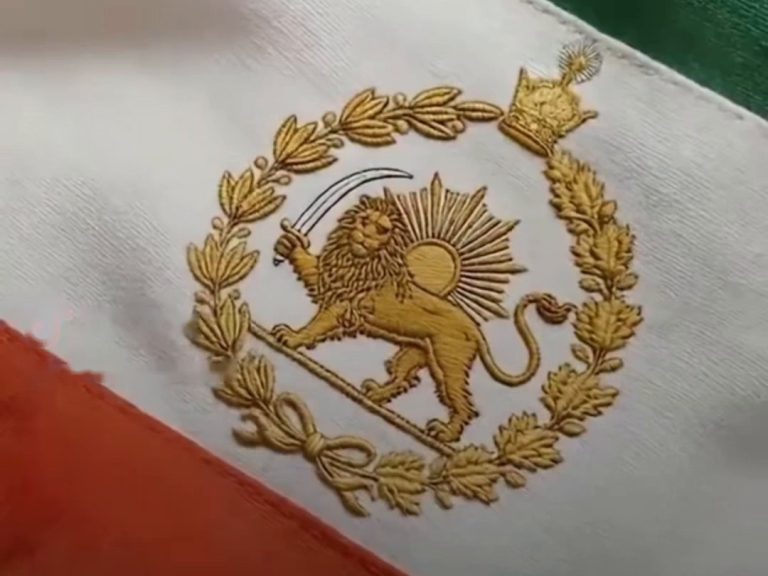
For that regime has never loved this name. It attached to it the adjective “Islamic”, as one puts a seal on a door. It sought to make people forget Darius, Cyrus and Ferdowsi, to ban the Lion and Sun, to extinguish Nowruz and the fires of Chaharshanbeh Suri. It never succeeded. Every spring, millions of Iranians still leap over the fire, as their ancestors did long before Islam.
Ērān: “of the Aryans”. A genitive plural. A word that says we. For three thousand years it has repeated the same thing to anyone willing to hear: this country belongs to its people.
“Ma melat-e kabirim, Iran ro pas migirim.” — “We are a great nation, we will take Iran back.”
Payandeh Iran. Javid Shah.
References
- J. P. Mallory and D. Q. Adams, The Oxford Introduction to Proto-Indo-European and the Proto-Indo-European World, Oxford University Press, 2006; O. Szemerényi, “Studies in the Kinship Terminology of the Indo-European Languages”, Acta Iranica 16, 1977; P. Thieme, Der Fremdling im Ṛgveda, 1938.
- Herodotus, Histories, VII, 62.
- Inscription of Darius I at Naqsh-e Rostam (DNa), §2; R. G. Kent, Old Persian: Grammar, Texts, Lexicon, 1953; R. Schmitt, The Old Persian Inscriptions of Naqsh-i Rustam and Persepolis, 2000.
- Avesta, Vendidad, chapter 1.
- Encyclopaedia Iranica, “Ērān, Ērānšahr” (G. Gnoli); inscription of Ardashir I at Naqsh-e Rostam; inscription of Shapur I at the Kaʿba-ye Zartosht (ŠKZ).
- G. Gnoli, The Idea of Iran: An Essay on its Origin, Rome, IsMEO, 1989.
- “Name of Iran”, summary of the sources on the 1935 decree and the 1959 committee.
- F. Max Müller, Biographies of Words and the Home of the Aryas, London, 1888, p. 120.