Paris, 14 juin : et notre roi est un forgeron
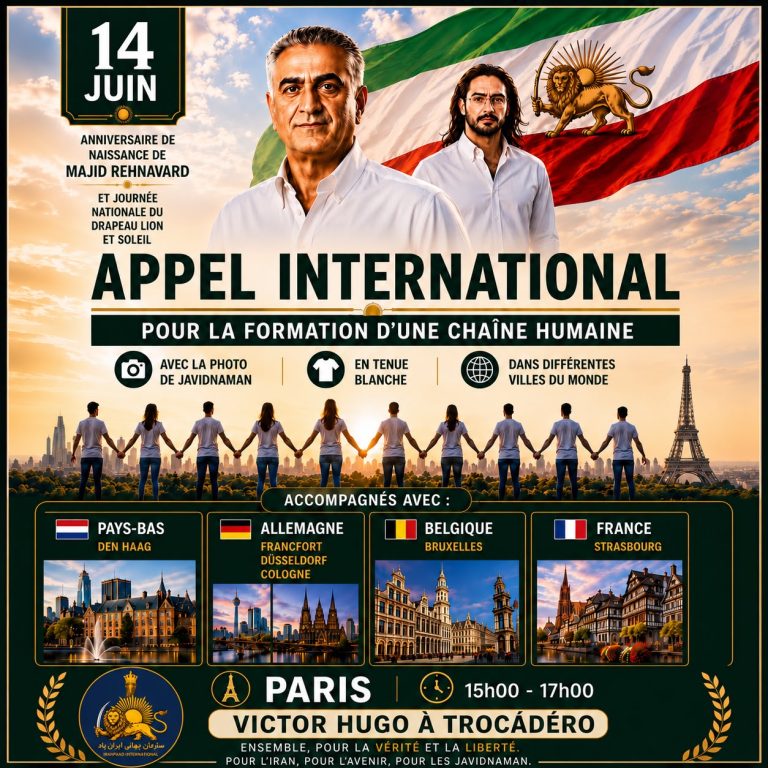
Paris · 14 juin 2026
Paris, 14 juin :
et notre roi est un forgeron
Sous le soleil, la diaspora a transformé Paris en bastion. Et du cœur du cortège est monté un chant — « Shâh-e mâ âhangar ast », notre roi est un forgeron.
Paris s’est levée, et la rue est devenue un bastion
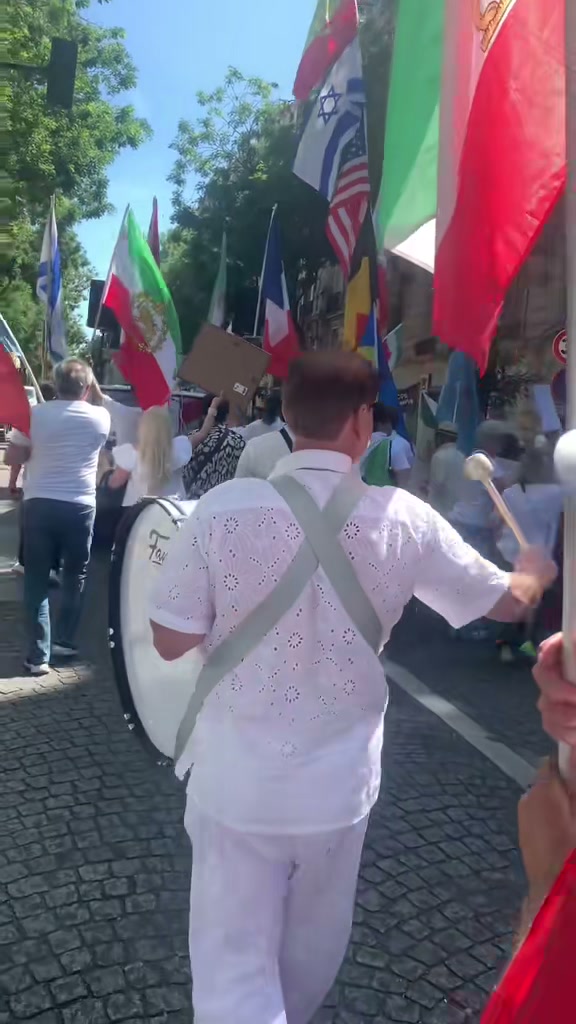
Le 14 juin, Paris n’a pas marché : Paris s’est dressée. Sous le soleil, le long des avenues haussmanniennes, un fleuve de Lion et Soleil a coulé — drapeaux levés comme des serments, tambours battant le cœur d’une nation qu’on dit lointaine et qui, ce jour-là, était là, entière, vivante, debout.
Ils étaient vêtus de blanc comme on se vêt pour un serment. Et dans leurs mains, ce n’étaient pas des armes : c’étaient des drapeaux, et c’étaient des noms — ceux des enfants tombés, ceux que Zahaak a voulu effacer et que la rue, obstinée, refuse d’oublier.
Et du cœur du cortège, un chant s’est levé
Par-dessus les tambours, une voix est montée. Puis dix. Puis mille. Un chant simple comme un marteau qui frappe l’enclume : « Notre roi est un forgeron. »
Comprend qui veut comprendre. Le forgeron, c’est Kâveh — celui du Shahnameh, l’homme du peuple qui, ayant vu ses fils dévorés par les serpents du tyran Zahaak, arracha son tablier de cuir, le hissa au bout d’une lance et en fit l’étendard d’un peuple qui se relève. Trois mille ans plus tard, le Zahaak a changé de visage — il porte aujourd’hui le turban des Mollahs — mais le forgeron, lui, n’a pas changé : c’est nous.
Le chant, en entier
Les tulipes, ce sont nos martyrs : chaque pétale arraché est un visage, chaque rue est une tombe et un berceau. Mais le chant ne pleure pas seulement : il forge. Il dit que la maison — khâne, la patrie — est devenue de bout en bout un sangar, un bastion ; que ceux qui marchent à Paris et ceux qui brûlent les peurs à Téhéran frappent la même enclume.
Paris, le 14 juin, n’a pas été une fin.
C’était un coup de marteau de plus sur le fer rouge.
Zahaak croit régner ; il ne fait que se consumer. Et tant qu’un seul forgeron lèvera son tablier, l’étendard de Kâveh flottera.
Par Ashk-7000
Paris · 14 June 2026
Paris, 14 June:
and our king is a blacksmith
Under the sun, the diaspora turned Paris into a bastion. And from the heart of the march a song rose — “Shâh-e mâ âhangar ast,” our king is a blacksmith.
Paris rose, and the street became a bastion
On 14 June, Paris did not merely march: Paris rose. Under the sun, along the Haussmann avenues, a river of Lion and Sun flowed — banners raised like oaths, drums beating the heart of a nation said to be far away and which, that day, was here, whole, alive, standing.
They were dressed in white, as one dresses for an oath. And in their hands were not weapons but flags — and names: those of the fallen children, those Zahaak wanted to erase and that the street, stubborn, refuses to forget.
And from the heart of the march, a song rose
Above the drums, a voice rose. Then ten. Then a thousand. A song simple as a hammer striking the anvil: “Our king is a blacksmith.”
Understand who will. The blacksmith is Kâveh — the one from the Shahnameh, the man of the people who, having seen his sons devoured by the tyrant Zahaak‘s serpents, tore off his leather apron, raised it on a spear and made it the banner of a rising people. Three thousand years later, Zahaak has changed his face — today he wears the Mullahs’ turban — but the blacksmith has not changed: he is us.
The song, in full
The tulips are our martyrs: each torn petal is a face, each street a grave and a cradle. But the song does not only weep: it forges. It says the house — khâne, the homeland — has become a bastion from end to end; that those who march in Paris and those who burn away fear in Tehran strike the same anvil.
Paris, on 14 June, was not an end.
It was one more hammer-blow on the red iron.
Zahaak thinks he reigns; he is only burning away. And as long as a single blacksmith raises his apron, the banner of Kâveh will fly.
By Ashk-7000
پاریس · ۱۴ ژوئن ۲۰۲۶
پاریس، ۱۴ ژوئن:
و شاهِ ما آهنگر است
زیرِ آفتاب، ایرانیانِ بیرون از میهن پاریس را به سنگر بدل کردند. و از دلِ کاروان، ترانهای برخاست — «شاهِ ما آهنگر است».
پاریس بهپا خاست و خیابان سنگر شد
چهاردهمِ ژوئن، پاریس تنها راه نرفت: پاریس بهپا خاست. زیرِ آفتاب، در امتدادِ خیابانهای هوسمان، رودی از شیر و خورشید جاری شد — بیرقها چون سوگند برافراشته، و طبلها بر قلبِ ملتی میکوبید که میگویند دور است و آن روز اینجا بود، تمام، زنده، ایستاده.
سفیدپوش بودند، چنانکه برای سوگند میپوشند. و در دستانشان نه سلاح، که درفش بود و نام — نامِ فرزندانِ برخاکافتاده، آنان که ضحاک خواست پاکشان کند و خیابانِ سرسخت از یادشان نمیبرد.
و از دلِ کاروان، ترانهای برخاست
بر فرازِ طبلها، صدایی برخاست. سپس ده. سپس هزار. ترانهای ساده چون پتکی که بر سندان فرود میآید: «شاهِ ما آهنگر است.»
هر که میخواهد دریابد. آهنگر، کاوه است — همان که در شاهنامه، مردی از مردم، چون پسرانش را طعمهٔ مارانِ ضحاک دید، پیشبندِ چرمیاش را برکند، بر نوکِ نیزه افراشت و آن را درفشِ مردمی کرد که برمیخیزند. سههزار سال بعد، ضحاک چهره عوض کرده — امروز عمامهٔ مُلاها بر سر دارد — اما آهنگر دگرگون نشده است: او ماییم.
ترانه، بهتمامی
لالهها شهیدانِ مایند: هر گلبرگِ پرپرشده چهرهایست، هر خیابان گوری و گهوارهای. اما ترانه تنها نمیگرید: میسازد، میآهنگرَد. میگوید که خانه — میهن — سراسر سنگر شده است؛ و آنان که در پاریس راه میروند و آنان که در تهران ترس را میسوزانند، بر یک سندان میکوبند.
پاریسِ چهاردهمِ ژوئن پایان نبود.
پتکی دیگر بود بر آهنِ گداخته.
ضحاک گمان میبرد که فرمان میراند؛ تنها میسوزد. و تا یک آهنگر پیشبندش را برافرازد، درفشِ کاوه در اهتزاز خواهد ماند.
به قلمِ Ashk-7000